What is a pentest, and how is one carried out?
A pentest, short for penetration test, is a simulated attack on a system, a network or a web application. This article sets out what one is, how it runs, and which types exist.
What is a pentest?

A pentest, short for penetration test, is a simulated cyber attack on a computer system, a network or a web application. The point is to find weaknesses in its security and judge how serious they are. Put differently: a pentest tests how well a company’s digital walls would hold against a real attack.
How a pentest is carried out
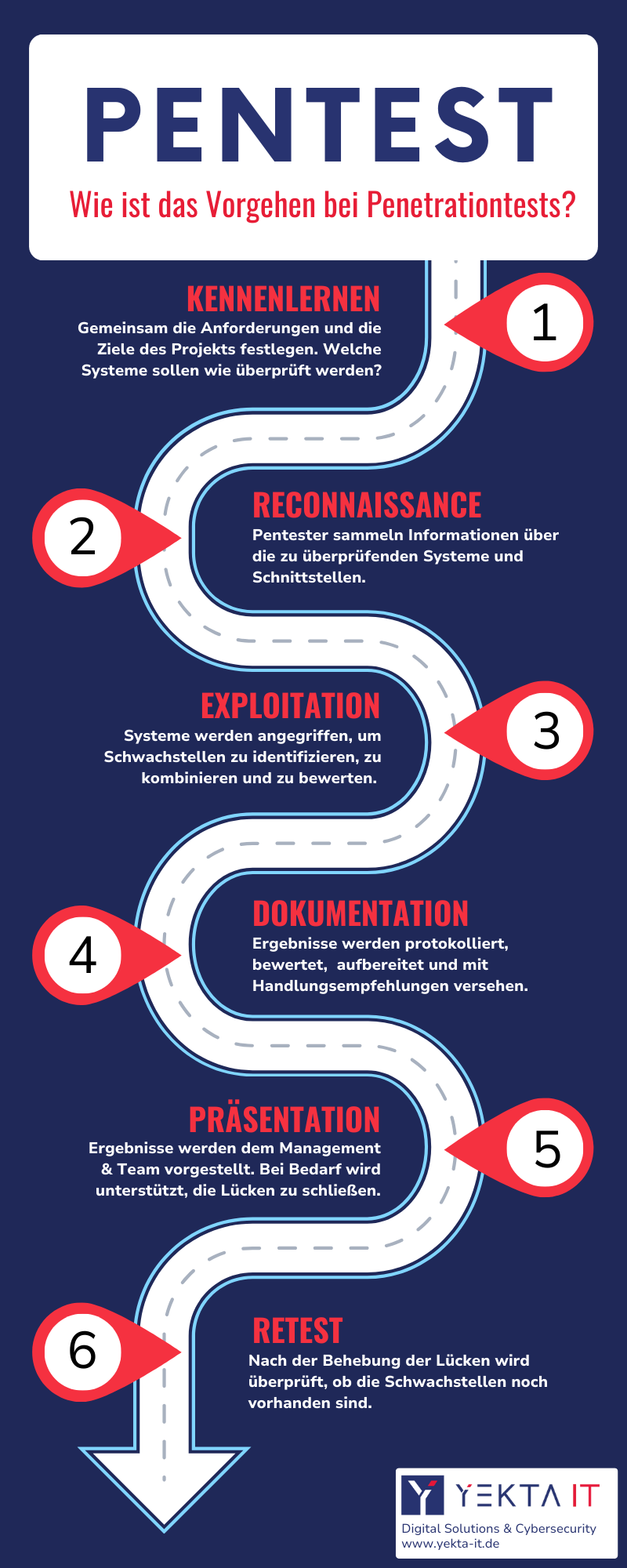
A pentest usually follows a structured approach, so that every potential weakness is covered:
- Planning and preparation: the first step, where the goals of the test are set. It is agreed which systems are in scope and which are not, so that the test has no unintended effects.
- Reconnaissance: before any attack is simulated, the tester gathers as much information about the target as possible. That can include publicly available information, DNS records, IP addresses and more.
- Scanning: specialised tools scan the target systems to identify open ports and running services. This helps the tester find potential ways in.
- Gaining access: the tester tries to exploit the identified weaknesses to get into the system or application. That can mean software bugs, insecure configuration or other weaknesses.
- Maintaining access: this phase tests whether an attacker can stay in the system undetected, which is what a real attacker seeking lasting access would do.
- Analysis: after the test, a detailed report is written. It sets out the weaknesses that were found, how they were exploited, which data was potentially exposed, and what to do about each one.
Types of pentest
- Black box: the tester has no prior information about the target. This is closest to a real external attacker trying to get in without inside knowledge.
- White box: the tester has full access to information about the system, including network diagrams and source code. This allows the most thorough review.
- Grey box: a combination of the two. The tester has limited information about the system, which gives partial insight while leaving some of the work to be done from the outside.
- Red team assessment: a broader approach in which a team tries to get into a system using every available technique and method. It simulates an advanced, targeted attack.
- Social engineering test: people are often the weakest link in the chain. This test tries to gain access through human interaction, such as phishing emails or pretext calls.
Why a pentest matters
A pentest gives a company a detailed picture of where its security actually stands. It surfaces weaknesses before a real attacker uses them. Running one regularly is how the security of company data, and the trust of customers and partners, is kept intact.
Yekta IT as your partner for pentests
Checking systems and applications for security gaps regularly is part of running them. A pentest is one effective way to do that. If you want to strengthen the security of your company, get in touch with Yekta IT.
For anyone who prefers it visually, we have also made an infographic:
How a pentest works, as an infographic